


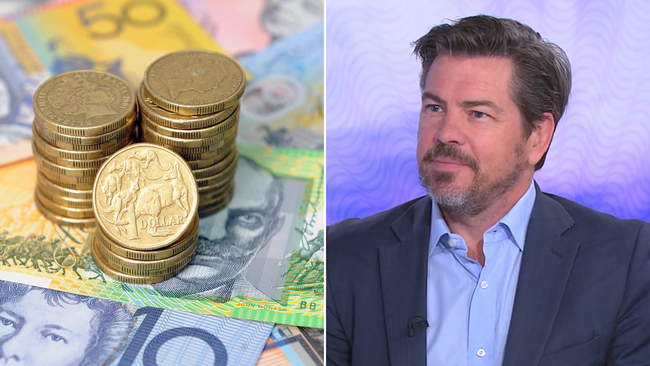
Australians are being warned to brace for potentially two more interest rate rises before the end of the year, with a leading economist declaring inflation remains too high.
HSBC chief economist Paul Bloxham told Sunrise on Wednesday he expects the Reserve Bank to raise the cash rate at its September meeting, while warning there is a chance another increase could follow in November.
WATCH THE VIDEO ABOVE: September interest rate hike looms as inflation persists
Know the news with the 7NEWS app: Download today
“Inflation is too high. The economy is growing faster than its speed limit. It’s growing faster than it can actually deliver at the moment,” he said.
His comments come after Macquarie Bank said recent language from the RBA suggested it was leaning towards another rate rise as it battles stubborn inflation.
‘Inflation is the primary problem’
Bloxham said the RBA’s focus on bringing inflation under control had become increasingly clear.
“Inflation is the primary problem,” he said.
“I think the RBA has become a lot more clear about the fact that it’s focused on getting inflation down over a reasonable horizon.”
The warning comes as households continue to grapple with elevated living costs and mortgage repayments.
But Bloxham said the problem facing the economy was bigger than customer restraint, pointing to an imbalance between demand and the economy’s ability to supply goods and services.
“There’s too much spending going on in the economy for what is an economy that is actually really quite supply-constrained,” he said.

Housing and energy contraints
Bloxham said Australia’s ability to increase supply was being hampered by several structural problems, including housing and energy.
“We don’t seem to be able to deliver as much as we used to,” he said.
“We can’t build enough housing. We haven’t got enough cheap energy. We just haven’t got enough efficiency in the economy to meet that demand.”
He said one response was for the RBA to slow demand through higher interest rates, but monetary policy could only address part of the problem.
“The real focus should be on trying to lift the speed limit and reduce some of those supply constraints,” he said.
“Find a way to deliver more supply into the economy.”
The catch, he said, is that increasing supply cannot happen quickly.
Migration warning
Bloxham also weighed in on the potential economic impact of the federal government’s reported plans to reduce migration, which are understood to include tighter rules around family and dependent visas for international students and a greater focus on onshore applications from skilled workers.
He warned migration was playing a significant role in Australia’s economic growth. “Keep in mind, migration is driving population growth and population growth is the only thing that’s been growing the economy in recent years,” he said.
“We haven’t had any much productivity growth per capita. Per person GDP has actually been pretty flat.
“So, if you take away the population growth, you actually might flatten the economy altogether.”
Bloxham said the focus should instead be on ensuring migrants with the skills needed by the economy were coming to Australia.
He cautioned against simply making large cuts to migration without addressing the economy’s workforce needs.
“The key here is to get the mix of migration right, to get the sorts of skills we need coming into the economy,” he said.
“We’ve got to do that very, very carefully because, if we really just slash migration significantly, we’ll just stall the economy rather than also finding a way to deliver that more supply.
“We learned that lesson after COVID. We closed the border for two years, (then) we reopened the economy and we didn’t have enough workers.
“So the migration program is a key part of how the economy functions on the supply side.”


